
MORE than a third of Barnsley’s population live in some of the most deprived areas in the entire country - prompting a local councillor to call for more to be done to support local people.
At next week’s overview and scrutiny meeting, councillors will discuss the latest report on health inequalities across the borough.
The council say that there is currently a ‘significant’ amount of work happening in Barnsley which looks to address the inequalities - both directly within the health and care system and in local communities.
The data looks at factors such as fuel poverty, life expectancy, self-reported poor health and antisocial behaviour incidents - with many areas of the town performing poorly in each metric.
One of those wards is Worsbrough which has the worst life expectancy for both men and women in Barnsley, as well as one of the highest percentages of its residents living in fuel poverty.
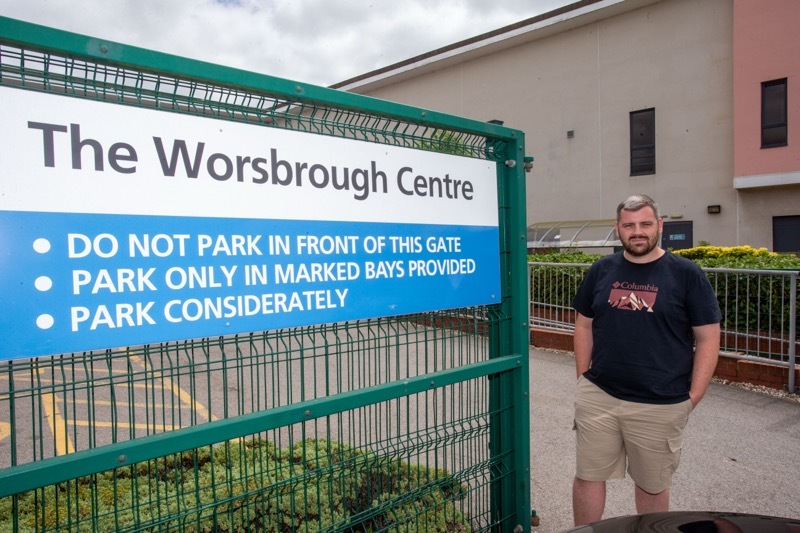
Coun Jake Lodge, who represents the area, told the Chronicle that more needs to be done to support residents and to improve the inequalities that are seen in the town.
He raised concerns that men in his ward have a life expectancy of less than 75 years old, whilst men in Penistone East expected to live up to 83.
Worsbrough also has some of the highest recorded rates of disability and self-reported poor health across all 21 wards.
Coun Lodge said: “These figures are extremely alarming but aren’t of a surprise to me because day after day I am supporting residents who face these health inequalities, and we must do more to reduce the gap across the borough.
“The work being done to introduce Health on the High Street is very welcome but is contradicted by plans to cut welfare and planned cuts and reform to SEND support by national government.
“I want to see children born in communities like mine live long and healthy lives.
“There is a lot that can be done to help reduce these inequalities and our area council’s do so much in this regard and I hope that more funding will be provided as part of the council’s plan to tackle these inequalities, so that we’re able to extend the work being done in my own patch through and by the area council and ward alliance to improve our environment, reduce crime and antisocial behaviour and provide youth work in our parks and estates.”
The majority of wards in Barnsley have some worrying metrics - but Dearne North, Dearne South, St Helen’s, Cudworth and Monk Bretton are among the worst alongside Worsbrough.
In comparison, Penistone East, Penistone West, Darton East and Darton West fair quite well in a lot of the data.
For instance, just five per cent of residents in Penistone East are classed as economically inactive and it’s only 6.4 per cent in the neighbouring Penistone West ward.
In contrast, around 17 per cent - more than three times more - of people in Dearne North are deemed economically inactive.
The statistics are even more stark on a national level, with around 39 per cent of Barnsley residents living in 20 per cent of the most deprived areas of the country - much of the factors influencing this include education, access to food, housing, and employment.
The report states: “Health inequalities refer to the unfair and avoidable difference in health between different groups of people.
“These disparities are closely linked to levels of deprivation and the wider determinants of health such as income, food access, education, employment, housing, environment and access to services.
“All of these factors shape and influence people’s opportunities to live healthy lives.
“Individuals living in more deprived areas are significantly more likely to experience poorer health, live with multiple long-term conditions and ultimately die at a younger age than those in more affluent communities.
“This is particularly pertinent given that approximately 39.4 per cent of the Barnsley population live within the 20 per cent most deprived areas in the country.”
In a joint statement, Barnsley Council and the NHS Integrated Care Board told the Chronicle: “We’re working together in Barnsley to reduce health inequalities and help everyone live healthier, happier lives.
“These challenges are linked to things like income, education, housing, jobs, and access to services - and we’re tackling them directly.
“With £1.3m from NHS England, we’re delivering the NHS Ten Year Plan, including a new neighbourhood health model that brings services closer to home.
“We’re also improving the wider factors that affect health by helping people into work through Pathways to Work, strengthening communities through Love Where You Live, and supporting families through the Great Childhoods Ambition.
“All of this is guided by our shared vision through the Barnsley 2030 Board.
“We’re also making it easier to access support - for example, Health on the High Street at the Alhambra Centre.
“Together, we’re creating a place of possibilities where everyone can thrive - no matter their background or circumstances.”