
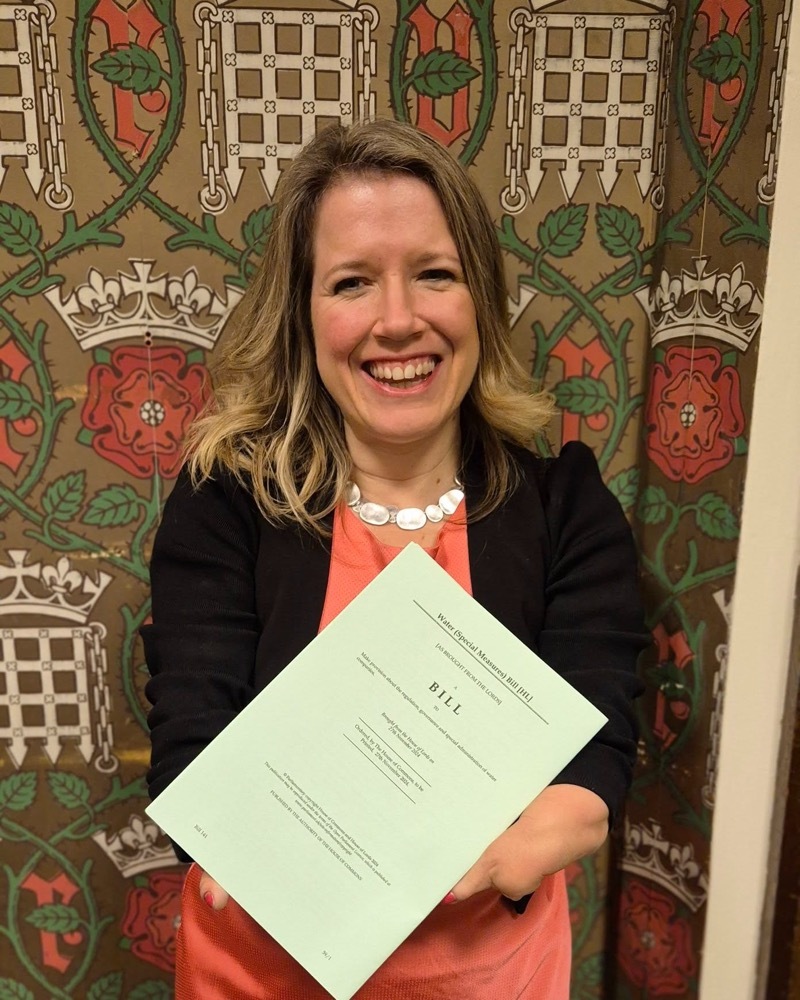
LANDMARK law changes which will commit to cut pollution in waterways has been lauded by a local MP.
The government announced they will cut sewage pollution in half by 2030, investing £104bn to rebuild an ‘entire water network’.
This work will include upgrades to crumbling pipes and building new sewage treatment works, abolishing Ofwat and adding a new regulator to replace it.
This new ombudsman will have legal powers to protect customers in disputes with their water company, with a single, free point of contact to put money back in people’s pockets.
The 69-mile-long River Don - which flows through the Penistone and Stocksbridge constituency - had almost 1,400 spills from Yorkshire Water alone, or 7,891 hours in total in a year.
Silkstone Beck, which runs from Silkstone Common towards Barnsley, and Highwood Dike, near Wortley, have also been subject to serious sewage dumping.
Welcoming the reforms, Marie Tidball, MP for Penistone and Stocksbridge, said: “We have inherited record levels of illegal sewage dumping in our rivers, lakes and seas as a result of 14 years of failure from the Conservatives.
“In 2023, Yorkshire Water spilled sewage for over 18,000 hours across our waterways.
“Customers have also faced higher bills because the previous government allowed the water companies to get away with this.
“I listen to constituents regularly about unacceptably high water bills and sewage being dumped in our beautiful local waterways.
“I have written to and met with Yorkshire Water to raise these concerns directly.
“Our Labour government will not stand by and let this continue.”
It’s hoped the work will also help towards achieving a long-held plan of encouraging salmon populations back into the Don’s stretches.
Poor water quality - a key factor in populations becoming extinct due to South Yorkshire’s industrial past - have been reversed on worst-hit stretches and it’s believed it’s now at its best around Dunford Bridge, where the Don rises.
Salmon live in freshwater as juveniles but then migrate to sea to grow, for one to four years, before returning to the river in which they hatched in order to spawn.
Returning salmon do not feed during their time in freshwater as rich feeding at sea provides them with sufficient reserves even for those fish returning in January but not spawning until late autumn.
Once abundant in the Don catchment, numbers rapidly declined due to the severe pollution.
Marie added: “We’re cleaning up our water sector for good, to ensure hard-working families will never again face huge bill hikes like we saw last year.
“These decisive actions will also cut pollution into our beautiful rivers, lakes and seas.”