

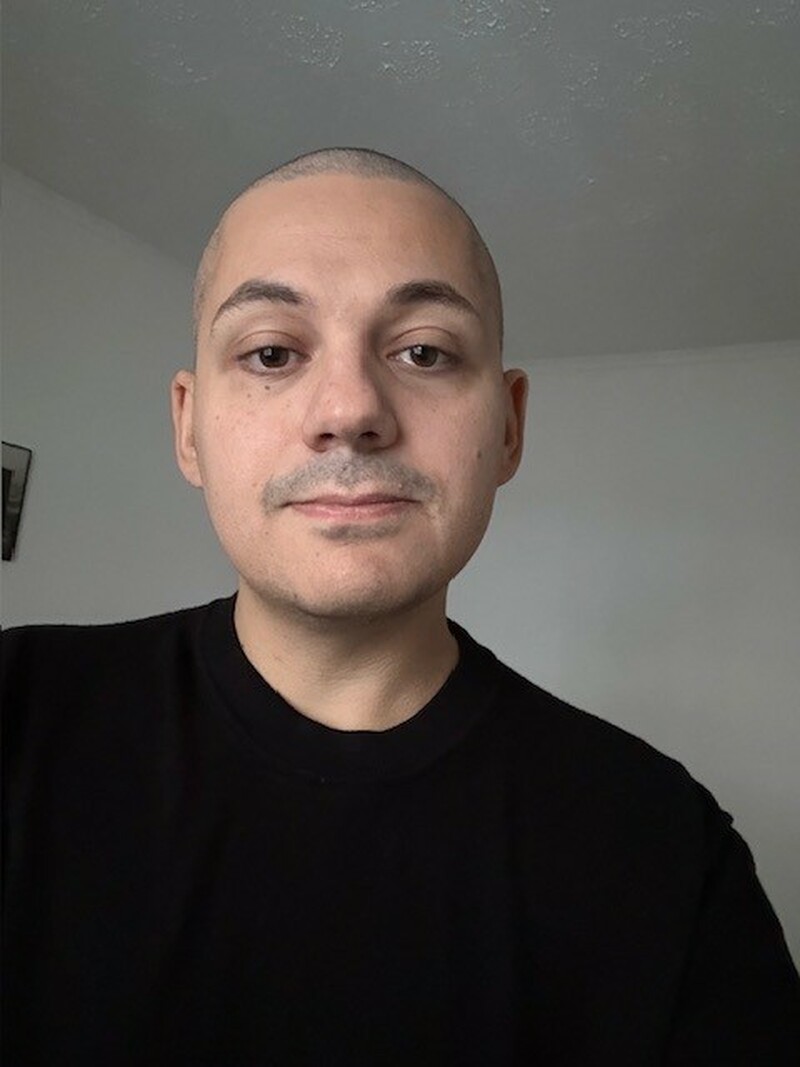
A CANCER patient from Barnsley who is now in remission having overcome non-Hodgkin lymphoma has backed a charity’s awareness drive in a bid to raise awareness of a common cancer.
Troy Winfield was diagnosed in 2024 and is now supporting Lymphoma Action’s ‘Let’s Talk Lymphoma’ campaign by sharing his story to raise the profile of lymphoma as the UK’s fifth-most common cancer.
Lymphoma is the most common cancer in teenagers and young adults.
Troy said: “Towards the end of October 2024, I was experiencing pain, swelling and discomfort in my left arm.
“I wouldn’t normally have been concerned, as it felt like a typical trapped nerve that we can all experience when we’ve slept on it a bit funny.
“What set this apart, however, was that the arm had a reddish and purplish hue when compared to my other arm - it was quite subtle, but my instinct was telling me that there was something untoward happening.
“I made plans to visit my GP and managed to get in quite promptly.”
He found that discussing his symptoms with 111 was helpful and was able to see a GP the next day.
The GP examined him and was not initially concerned until he showed the raised veins visible on his chest.
“The first doctor I met with also said that it was unlikely to be a blood clot, but ran a test anyway,” Troy added.
“However, the results indicated that it was likely that I had a blood clot, and I was told to come back a few days later for an ultrasound scan on my arm.
“The scan didn’t show a clot in that area, but just to be sure, the doctor requested a CT scan.
“I actually received my results very quickly - a lovely healthcare assistant who had been supporting me all day came to find me in the waiting room and took me to another room that already had two doctors sitting at the desk.
“I felt an immediate sinking feeling and, without thinking, asked ‘it’s cancer isn’t it’?
“I felt like I wasn’t in my own body, like I was watching someone else as the conversation unfolded and I was told I had a 10cm mass in my mediastinum - the space in the chest that contains the heart - and the doctor said the tumour was highly likely to be cancerous and that it was pressing on an important vein which caused a blood clot in my chest as a complication.”
Troy was admitted to hospital at this point to undergo the testing and diagnostic process.
Roughly two weeks after his hospital admission, in November 2024, he was diagnosed with stage two high-grade primary mediastinal large B-cell lymphoma, a type of non-Hodgkin lymphoma.
“I was obviously upset when I received the diagnosis, but I also felt an element of relief.
“I now knew what it was and what my treatment pathway would look like.
“I was told that the prognosis was good and felt reassured that there was a plan to follow.”
Six cycles of a chemotherapy called R-CHOP, with each letter representing a different drug (rituximab, cyclophosphamide, doxorubicin, vincristine, and prednisolone) followed,” he said.
“We had frank conversations about hair loss, and the potential impact of the treatment on my fertility.
“I also had a further conversation about treatment side effects with a doctor in a ‘consent for treatment’ appointment.
“They explained that the potential benefits of treatment outweighed the risks, but that treatment would impact my immune system so I was given a red card, with details of a 24-hour line I could call if I experienced certain side effects relating to low immunity.
“As I was really well informed on the side effects, nothing that followed came as a complete surprise.”
In March 2025 Troy had another scan and was told that he had reached complete remission.
However, he’s praised Lymphoma Action’s help.
He told the Chronicle: “Throughout my diagnosis and treatment, the information and support available from Lymphoma Action has been a great help.
“Because my lymphoma type is quite rare, I was worried I wouldn’t find many people who had the same diagnosis, but I was surprised to find that there were many people with same type of lymphoma as me who were able to share some reassuring comments and experiences.
“Before this experience, I only ever thought there was one kind of blood cancer - leukaemia - and that this only affected young adults or children.
“That is why I am sharing my story, as raising awareness about blood cancer is so important.
“As with many cancers, early detection and treatment can be key so it is so important to be informed on common symptoms to look out for.”