
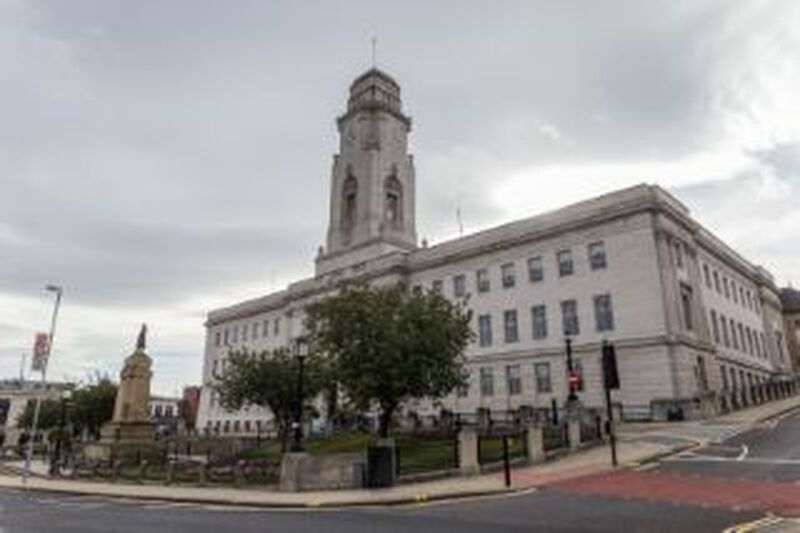
STAFF absences at Barnsley Council equated to more than 76 years of missed work over the latest 12-month period, a report has revealed.
Local councillors will discuss the employee sickness and absence report at a meeting next week.
Over the latest 12-month period, a total of 27,858 days were missed by council staff.
It’s a 15 per cent rise on the previous year’s figure when 24,187 days were missed by staff.
Similarly to 2023/24, the main reason for staff absence this year was mental health - including stress, anxiety and depression.
Those absences amounted to 7,379 days missed - more than a quarter of all missed days at work.
The second highest reason for absence during 2024/25 was gastrointestinal.
These absences amounted to 2,057 days.
Other reasons for absence throughout the year were injury and fracture (1,825.5 days) cough, colds and flu (1,538 days), musculoskeletal (1,422 days), genitourinary and gynaecological (1,135 days), chest and respiratory (817 days), back issues (672.5 days) and cancer (631 days).
The report states that a target of no more than 8.5 days sickness absence per employee was missed last year, with 9.2 the final figure.
Despite the increase in overall sickness absence, Barnsley Council’s rate remains the lowest among comparable councils in the Yorkshire and Humber region, the report says.
It added: “Our figures follow similar local and national trends across the period including a return to pre-Covid levels.
“Our sickness rate has increased in 2024/25 which is mirrored in other authorities.
“However, our rate is the lowest in this comparison group.
“Public sector sickness remains significantly higher (3.6 per cent) than the private sector (2.3 per cent) attributed to factors like higher sick pay provision and larger workforces.
“An ONS report in 2025 found the average UK employee took 9.4 days off in 2025 (up from 7.8 in 2023), with the public sector seeing higher rates.
“The CIPD report entitled, ‘Good Work Index 2025’ states overall in 2025, 63 per cent of employees described their mental and physical health as good - virtually unchanged over recent years.
“The report states 25 per cent of employees said their work impacts negatively or very negatively on their mental health, while 24 per cent said the same for their physical health.
“On a more positive note, the report found those whose tasks have been automated by AI also find themselves more satisfied in their job and more likely to feel the positive effects of work on their mental wellbeing.
“Job autonomy remains high and correlates with increased self-reported performance and improved mental health.”
The council has a host of support on offer already to help employees but the report states they have plans to widen the range.
It added: “We value our employees and want to demonstrate that we are committed to supporting them to lead healthy and fulfilling lives both inside and outside of work.
“Our wellbeing stakeholder group continue to identify and implement actions that support employee health and wellbeing.
“This includes encouraging discussions around mental health to continue to reduce any associated stigma, working with our EAP provider to support employees’ mental health by providing emotional support, as well as financial and legal advice and engaging with the hospital to identify opportunities for the council to access additional professional services.”