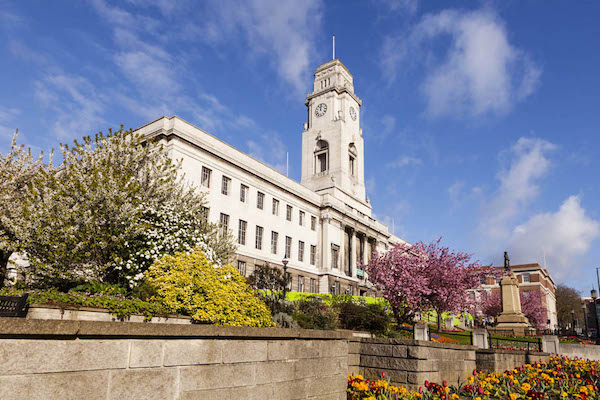
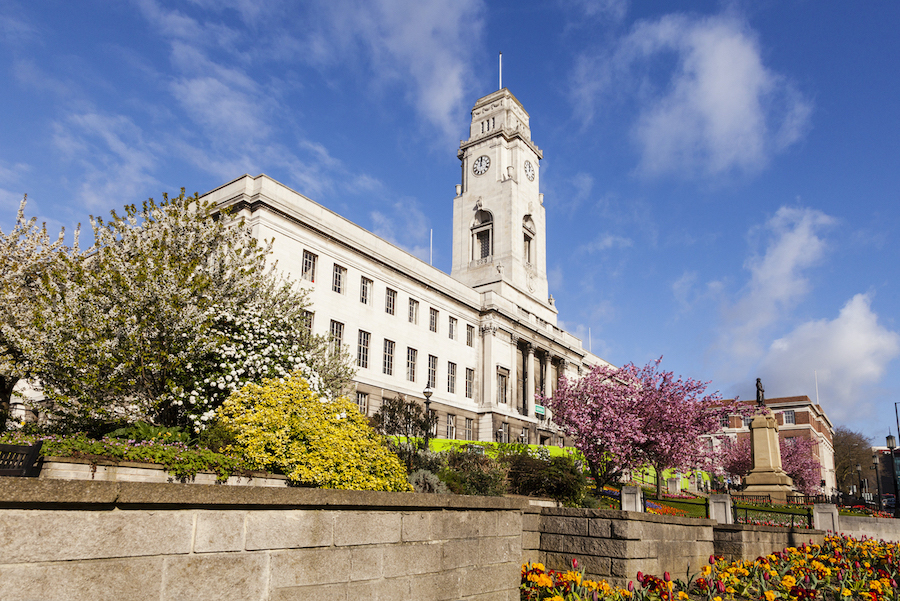
ON Friday February 7, 1812, Charles Dickens – one of Britain’s greatest novelists – was born. His parents could never have imagined the pleasure their new-born baby would eventually bring to the world through his wonderful story-telling. Nor could they have possibly predicted that, one day, he would be guest of honour at a huge banquet at Barnsley Town Hall.
This is not fantasyland, but it is the stuff that history is made of. In July 1859, at the height of his fame, Charles Dickens set off with a group from Kings Cross Station, heading to the south of Barnsley via Doncaster.
Their first proper stop was at Lundhill Colliery near Wombwell.
The colliery had become infamous two years previously, when it exploded, and a picture of the disaster had appeared on the front cover of London Illustrated News. 185 Barnsley men and boys had been killed that day, including two 10 year olds and one at only nine.
In 1859 the dignitaries, in the travelling party, were heading north for various reasons.
Dickens’s life’s-work was to change the world by highlighting the terrible living and working conditions in Victorian Britain. He strongly believed that fiction was the best way to achieve it.
Others on the train, mainly coal merchants, were more concerned with making lucrative business deals with mine-owners.
The party, including Dickens, spent time underground at Lundhill to examine the pit’s internal workings, and later that day they also went underground at both the Edmund’s Colliery (Worsboro’) and The Oaks. The Oaks was particularly poignant because seven years later, 361 Barnsley lads were killed in another methane gas explosion.
From there the large group travelled by train to Barnsley town centre and then made its way to Market Hill. At the King’s Head Inn they washed and dressed for the banquet (The King’s Head was demolished in the 1930s to make way for the present Town Hall). At this time Dickens was at the pinnacle of his career and thousands would turn up wherever the Great Man appeared in public. He’d already written ‘Oliver Twist’, ‘David Copperfield, and ‘A Xmas Carol’, and his visit to Barnsley meant he was able to take a break from writing ‘A Tale of Two Cities’.
Dickens certainly would not have been writing during the journey. He was always the life and soul of any party and adored by others. So I imagine, with his wit and humour, he would have made a scintillating travelling companion.
The banquet, in his honour, was held at the Corn Exchange which, in Victorian times, doubled as the Town Hall.
It occupied the site where the HSBC bank stands today – adjacent the Old Number 7 bar.
During the bean feast, each visitor was gifted a neat lithographic plan with descriptive letterpress of the workings of each pit.
On his return to London, he wrote about his trip to our town in the ‘All Year Round’ journal in which he confronted, head-on, the disparaging myth of ‘dirty Barnsley’:
“[Our journey] was underway.... for what was called the black Yorkshire town of Barnsley.”
He then went on to personify the town: “[Barnsley] is not so dirty as he is painted. I was not surprised to find Barnsley excessively neat, clean and respectable. The town itself was white enough for all practical purposes. It was visitors alone who required washing.”
Dickens entertained many audiences with his work, in towns and cities in the UK and US, so it’s a great shame that he never did an actual book-reading gig here in Barnsley.
On his travels he would read dramatic extracts to a mass audience but sometimes would simply recount them from memory. Either way, the pieces he performed were full of strenuous emotion and always took his audience by storm, as well as taking its toll on his health.
You can learn more about Dickens’s visit to Barnsley by Googling the ‘Conisbrough and Denaby Local History Society’. There you will find ‘Lundhill Disaster – Article 3 – Charles Dickens Visited the Stricken Pit’.
And for a brilliant biography (which, unfortunately, doesn’t mention Tarn) I recommend ‘Charles Dickens – A Life’ by Claire Tomalin.