

PLANS to get Barnsley residents back into work as part of a trailblazing scheme to boost employment rates have already started make inroads in doing so, leaders revealed this week.
In November, the Pathways to Work Commission was selected in the government’s ‘Get Britain Working’ white paper.
This approach will deliver personalised support to 2,200 people in Barnsley, so they can overcome barriers that prevent them from working, while improving their skills and employability.
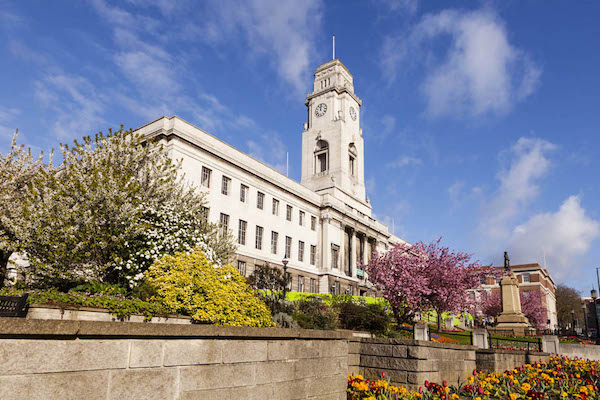
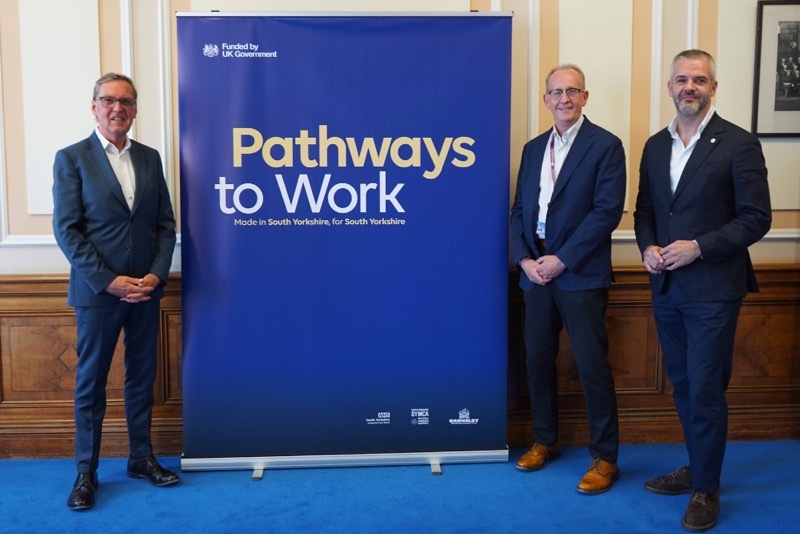
Leaders gathered at Barnsley Town Hall to mark the one-year anniversary of the report - an initiative born in the town that has since sparked national momentum in tackling economic inactivity.
The event brought together influential regional and national voices to reflect on the progress made since the commission’s launch and to outline the next phase of delivery.
Keynote speeches were delivered by Rt Hon Alan Milburn, chair of the commission and former Secretary of State for Health, South Yorkshire Mayor Oliver Coppard and Barnsley Council leader Sir Steve Houghton.
Sir Steve said: “Barnsley has always led from the front and this is a powerful example of what we can achieve when we act with purpose and ambition.
“We’re proud to be one of just nine areas in the country developing a trailblazing model that brings health, skills and employment support together in a more connected system that works for everyone.
“What began as a local commission has grown into a national movement.
“With 520 participants enrolled and 30 people already supported into jobs, we’re showing what’s possible when we break down barriers and connect people to opportunity.
“This isn’t just about employment, it’s about supporting people into healthier, happier and more productive lives.
“We’re excited about what’s next and the difference it will continue to make across our region.”
The event also featured a review of the commission’s recommendations, powerful case studies from residents supported into work and a roundtable with local businesses focused on how the region can work collectively to help people not only get into work, but stay in work.
The anniversary marked a ‘pivotal moment’ in the region’s journey to reduce economic inactivity and build a more inclusive economy.
Rt Hon Milburn added: “This commission was established to find the people of Barnsley a pathway into work.
“In many ways Barnsley is a symbol for what has happened over the last four decades in Britain.
“In the 1980s Barnsley and South Yorkshire were on the frontline of the national tragedy of mass unemployment as pit closures in the region decimated local communities.
“Today, Barnsley’s unemployment rates are below national and regional averages so much progress has been made in revitalising the local economy.
“Tackling economic inactivity must become a national mission, one that unites government, employers, local authorities and of course people themselves.
“The commission’s report stressed that lasting change requires action not just nationally, but locally too.
“Over the past year, a quiet revolution has begun - and Barnsley and South Yorkshire are leading the way.
“The commission’s findings, and the local steps taken to implement them, have not only shaped national policy but also inspired other areas, from North Yorkshire to Northern Ireland.
“Change is essential and it must come with urgency - we’ve made a strong start.
“Now it’s time to accelerate, get more people out of economic inactivity and back into work and this must become a shared imperative.
“I have no doubt that Barnsley will continue to lead the change.”
Figures show that 27 per cent of the working-age population in the town are not in work - with the main barrier cited as ‘ill health’.
Whilst the unemployment rate in Barnsley is lower than the national average at 2.9 per cent, these are people who are actively looking for work.
Mr Coppard said: “We know the decline of our traditional industries left a legacy of poor health, of fractured communities, and limited opportunities, which is still holding people back across our region.
“But we’re changing things, not just identifying the challenges, but tackling them head-on.
“Pathways to Work shows what happens when we put people at the heart of change.
“In just one year, it’s grown from a local pilot into a nationally-recognised programme, backed by government investment and set to support 10,000 people across our region access good jobs.”