
A MAN is determined to keep the memories of former miners who lost their lives in a pit disaster fresh in Barnsley residents’ minds as the 90th anniversary of the tragedy draws closer.
On September 12 in 1935, an explosion and devastating fire happened at North Gawber Colliery, Mapplewell.
Fifteen men were killed in the incident and many more were taken to Beckett Hospital where four more died from their injuries, bringing the total to 19.
Documents state that a crowd of up to 4,000 people congregated at the pithead following the incident in order to help the rescue effort.
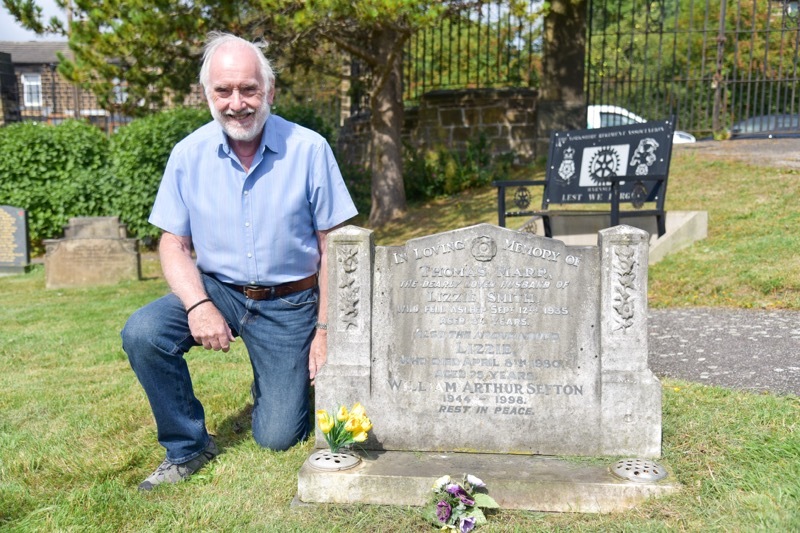
Bob Hawes, of Darton Lane, Mapplewell, is seeking relatives of the men who lost their lives in order to curate a display about them to mark the 90-year commemorations.
“The disaster was reported in national and local press; such an anniversary should not pass by unmarked,” he told the Chronicle.
“I am seeking to contact any living descendants of the 19 men, only four of whom seem to have been single.
“I hope to hear of family stories and to receive on loan photographs and any documentation to use in a display to remind the community of this tragedy.”
The men who died were Claude Ackroyd, 20; Robert Harold Brandt, 53;
Leo Bunting, 33; Jacob Fallis, 52; Richard Hurrell, 27; Albert Edward Ibberson, 55; Hubert Kelly, 19; Thomas Poyser, 27; Walter Riley, 54; Thomas Roberts, 40; James Senior, 48; Albert Smith, 39; Thomas Marr Smith, 34; Clifford Cawthorne Walker, 27; George Arthur Walley, 44; Joseph Stansfield Washington, 36; George Betton Whewall, 41; John Williams, 28 and George Wroe, 35.
“Six men were buried at All Saints’ Church, Darton, on September 16 in 1935 and another the following day,” Bob added,
“Three men were buried at St John’s, Staincross, one at Gawber and two at Monk Bretton, while four men were buried at Barnsley Cemetery.
“Two were buried at their family home, one in Hepworth and the other at Belper, Derbyshire.
“There is a performance of Remember the Coal scheduled for September 12 at 7pm at St John’s Parish Hall, on Greenside, Mapplewell but it’d be great if we could keep the memories alive.
“I believe such a thing should be marked and given it’s its 90th anniversary, it’d be great if we could do all we can to make sure it’s remembered accordingly.”
The disaster, well-documented both locally and nationally at the time, could have killed much more given an estimated 200 men were working on the day shift when disaster struck at about 2.45pm.
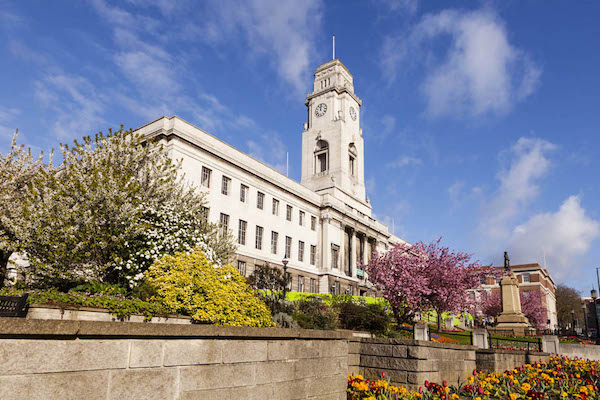
An inquiry into the incident was conducted by Sir Henry Walker, chief inspector of mines, at Barnsley Town Hall from October 22 to November 2.
It was a gassy seam and firedamp soon collected if the ventilation was interrupted, it found.
The coal was undercut by electrically-driven machines during the afternoon shift, brought down by shots fired on the night shift and filled on to electrically driven conveyors during the day shift.
However, a shot was fired in the afternoon in the Lidgett Seam was cited as the cause of the explosion and subsequent fire, acting as an accelerant for the ignition of firedamp.
Sir Henry’s report said: “Having inspected the area covered by the explosion and having heard the evidence, I am of the opinion that the shot fired in the ‘South Top Airway Gate’ was the originating cause of the explosion.
“That opinion is not capable of proof but is based on experience and not speculation.
“There can be no doubt that this shot should not have been fired.
“In my opinion, to fire a shot so close to an unventilated road, was extremely foolish.”