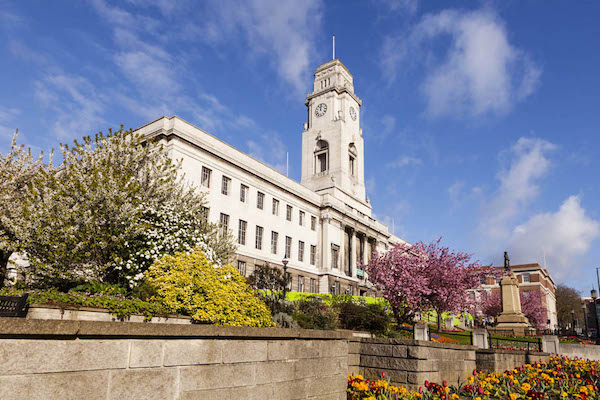
For more than a century, the Slazenger tennis balls used at Wimbledon made the short journey from the company's Barnsley factory to SW19.
Now the tennis balls used at Wimbledon travelled 50,570 miles around the world before they landed on Andy Murray’s racket on Centre Court.
"It is one of the longest journeys I have seen for a product," said Dr Mark Johnson, associate professor of operations management at Warwick Business School.
Dr Johnson has looked into the supply chain of the Wimbledon tennis ball and unearthed the surprisingly long and complex journey to one of the world’s biggest sporting events.
"On the face of it, travelling more than 50,000 miles to make a tennis ball does seem fairly ludicrous, but it just shows the global nature of production these days, and in the end, this will be the most cost-effective way of making tennis balls."
The parts which make up the official Wimbledon ball flies between 11 countries and across four continents before being manufactured in the Philippines and then travelling the final 6,660 miles to London.
A complex supply chain sees clay shipped from South Carolina in the USA, silica from Greece, magnesium carbonate from Japan, zinc oxide from Thailand, sulphur from South Korea and rubber from Malaysia to the Philippines where the rubber is vulcanised – a chemical process for making the rubber more durable.
Wool is then shipped from New Zealand to Stroud in Gloucestershire, where it is turned into felt and then sent back to the Philippines.
Meanwhile, petroleum naphthalene from Zibo in China and glue from Basilan in the Philippines are brought to the Philippines where Slazenger manufacture the ball.
Finally tins are shipped in from Indonesia and once the balls have been packaged they are sent to Wimbledon.
Dr Johnson said: “Slazenger shut down the factory in Barnsley in the early 2000s.
"They still get the felt from Stroud, as it requires a bit more technical expertise. Shipping wool from New Zealand to Stroud and then sending the felt back to the Philippines adds a lot of miles, but they obviously want to use the best wool for the Wimbledon balls."
• Tennis balls made at the Barnsley Slazenger factory for Wimbledon are on display at the Experience Barnsley museum.