


LAST Tuesday I watched the 1980s TV documentary, The Nazi Hunters, and I was convinced that one of the guys interviewed had a Barnsley accent.
Fred ‘Dusty’ Rhodes had been a sergeant in the Special Air Service (SAS), on a mission to Eastern France, just as World War Two ended. The small team he was part of had to discover what had happened to 32 SAS comrades who, just months earlier, had been parachuted behind German lines. All 32 had disappeared without trace.
Sergeant Rhodes and his commanding officer, Major Barksworth, visited the area where the commandos had been dropped, searching for clues. By gathering intelligence from recovered documents and the local population, Rhodes and Barksworth slowly pieced together the terrible fate of their former comrades.
Although the British had been stealthily assisted by many local civilians, one French traitor leaked the whereabouts of the British commandos to the Gestapo. This meant some were soon intercepted and wiped out, and others were, group-by-group, captured, tortured and summarily executed.
Furthermore, Rhodes and Barksworth discovered that as a punishment for helping the British, every single French male aged between 16 and 60, in the area of Moussey, was arrested and taken away. 100 of these captives were never seen again.
In addition, four female spies from Britain had also been captured, in the same area, at this time. After interrogation, they were imprisoned then lethally injected with carbolic acid and their bodies burned. One German, under questioning, admitted that one of the women was still alive when thrown into the incinerator.
Sergeant Rhodes and Major Barksworth were well aware that such inhuman acts were, under the Geneva Convention, undeniable war crimes.
When the documentary had finished, I Googled Fred ‘Dusty’ Rhodes and discovered he did, indeed, originate from Barnsley. So, I asked for help on Facebook to locate him, and 60 minutes later I was messaging his son, Phil Rhodes.
“Yes,” said Phil. “My father died in 1990 but I’d be happy to discuss him with you, Ronnie.”
On Thursday, we spent a fascinating 90 minutes talking about Fred, who was born on Cranbrook Street in 1920. Then, one year later, his family moved to 20 Raley Street.
“20 Raley Street? Never,” I said. “That’s less than 100 yards from where my dad’s family lived at 30 Harvey Street. Your dad must have known my dad, my uncle Bill, my uncle Ron and their two sisters, Alice and Rene.”
“Could well have, Ronnie,” he replied, as he took a sip of his coffee.
“And when he wasn’t fighting Nazis, what did your father do for a living?” I asked.
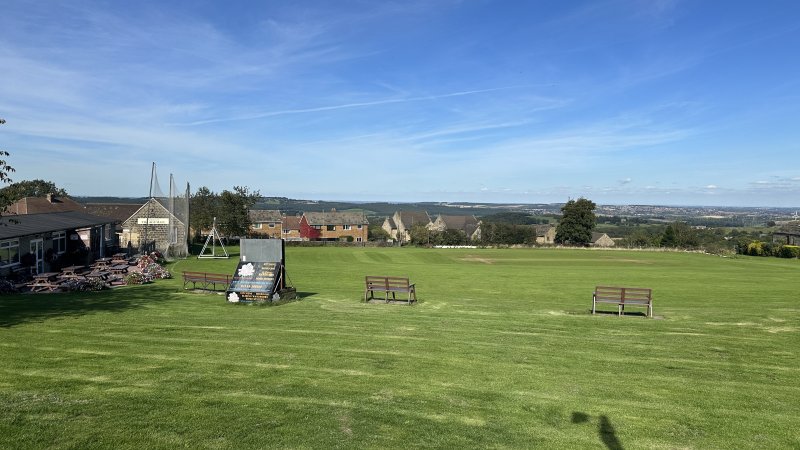
Phil explained that before the war he was first employed as an apprentice gardener at Locke Park. Then, after the war, he became head gardener at Wilthorpe Park and later at Royston Park.
“My father was a kind gentle man. I never saw him lose his temper and I’m told, by the people who worked under him, that he was loved as a boss. He became a local celebrity and was very much into amateur football. When everyone had tried and failed to improve a terribly uneven football field, my father used his influence to create the finest pitch in Royston.
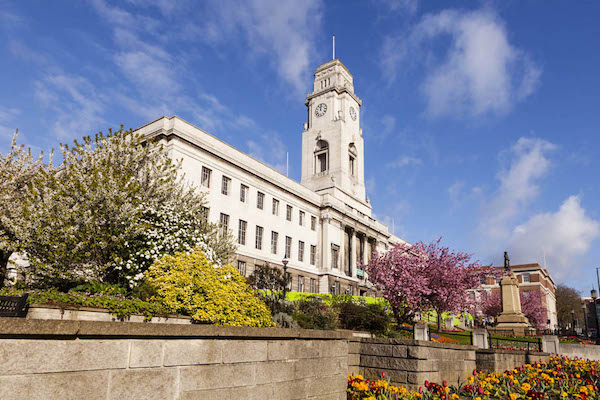
“Later in life, he retired as a horticulturalist and became deputy manager of Amenities for the council – working from the town hall.”
As we shook hands and parted I had time to reflect on Fred ‘Dusty’ Rhodes’ time, back in France, in 1945. He and Major Barksworth managed to capture almost all the Nazi murderers they were after. Most were found guilty at the Nuremburg Trials and were either executed or given long prison sentences.
Fred also took Henrich Neuschwanger back to the water-filled shell-hole where he admitted killing and dumping several of Fred’s close friends. When Neuschwanger displayed only contempt for his victims, Fred had had enough and punched the sneering Nazi into the same shell-hole – only pulling him out so he would face trial and the hangman. Neuschwanger was obviously unaware that Fred ‘Dusty’ Rhodes was from Barnsley.
The Gestapo officer, Dr Werner Rohde, who’d killed four women by lethal injection, avoided arrest until 1977. But before his case reached court, he fell to his death down a flight of stairs at his home.
It’s the unsung heroes like Fred ‘Dusty’ Rhodes that the people of our town must always remember. And I reckon, if truth be told, there are many more like him.