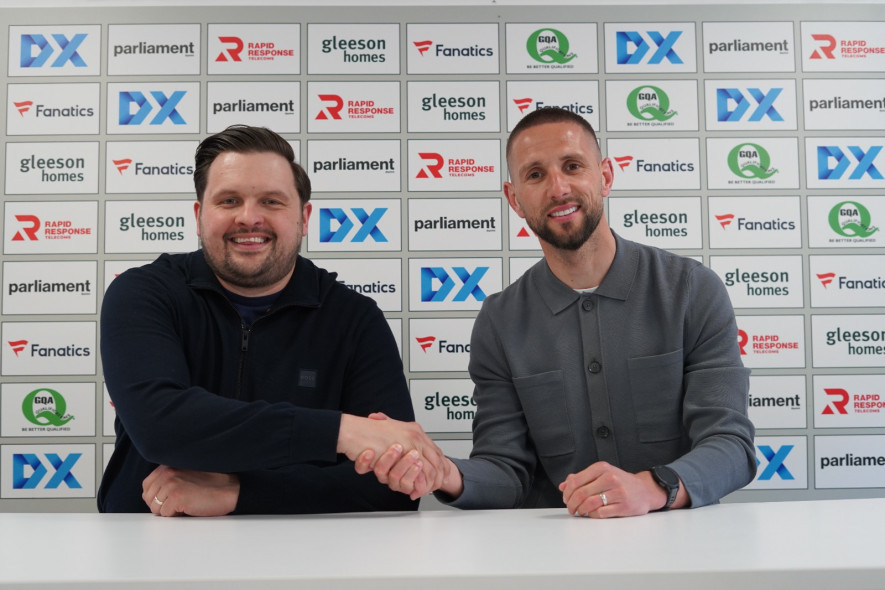
THIS week saw the departure of Mladen Sormaz after 19 months as Barnsley’s first ever sporting director.
The West Yorkshireman’s arrival in February last year meant the Reds changed approach after having a chief executive overseeing both football and non-football issues, with Jon Flatman taking over as chief executive and Mladen becoming the first ever sporting director after Bobby Hassell did the job on an interim basis.
Sormaz’s departure by mutual consent feels quite sudden – earlier in the month, he spoke to the press about having done his ‘bedding in period’ and being happy with how ‘aligned’ all departments were. It is unclear what prompted the move or what the plans are to replace the outgoing man who is still being paid on gardening leave.
Brought in his mid-30s, with experience more in data-led recruitment than any other part of the sporting director role, he came across well in interviews and other dealings but was extremely unpopular with sections of the fanbase – certainly among the more vocal online supporters.
Most of the people who occupy those roles at Oakwell, be at as chief executive in the past or now sporting director, are a lightning rod for criticism when times are tough as the public figurehead of a more complicated behind-the-scenes decision-making structure.
During Sormaz’s spell, Barnsley went from competing constantly in the top six to finishing 17 points away from it.
But it is sometimes unclear from the outside exactly who is responsible for the successes and failures of the club on the pitch and in the transfer market, and it is usually more of a collective culpability than one incompetent scapegoat.
The ownership group are very hands-on and often make the final decision, Flatman is thought to have taken on a wider role this summer while head coach Conor Hourihane allegedly had more say in recruitment than some of his predecessors.
That makes it very hard to analyse Sormaz’s performance but we can look at what went on at the club while he was in position.
During his time, Barnsley sacked Neill Collins with one game to play when they were fifth – a harsh but understandable decision given their retched form – appointed Darrell Clarke who was not the right fit in hindsight but was let down by poor recruitment, and Hourihane who is very popular and appears to have the makings of a good head coach.
There were regrettable incidents like Dominik Thalhammer coming over to replace Collins, only to discover he did not have a visa, while forwards Viktor Edvardsen then Josh Koroma both underwent medicals before backing out of deals at the last minute.
Barnsley desperately needed a striker in January of this year but all that arrived was a totally ill-equipped journeyman from the French lower leagues and a winger from the MLS who had not played a competitive game for months.
Sormaz was employed for three transfer windows at Barnsley. The two last season were disappointing to say the least, with January particularly disastrous after a tough summer window in which six of the top seven appearance-makers from the previous campaign left at the end of their loans or contracts.
Davis Keillor-Dunn was a brilliant signing, and a lot of the budget was rightly spent on him, but the other 13 players brought in that season are a different story.
None of them are now in the starting league 11, with only Neil Farrugia a bit-part player off the bench, while Georgie Gent and Marc Roberts are out injured after mixed seasons.
The others were Matty Craig, Gaga Slonina, Joe Gauci, Dexter Lembikisa and Clement Rodrigues – five loanees who ranged from forgettable to farcical – the opinion-splitting Stephen Humphrys who chose to move to Bradford and free agent Jon Lewis who barely featured.
Jackson Smith was brought in as the long-term number goalkeeper but has mainly been third choice and only briefly loaned out while Sormaz admitted the signing of Kelechi Nwakali – currently with the under 21s – was a mistake.
There was also Hourihane himself who retired from playing not long after arriving as a player/coach.
This summer window was different as, across the opening nine league games, the majority of the eight new signings have at least shown promise and you can understand why they have been signed and where they fit in. There is strength in depth and variation in defence and midfield.
That is despite operating on a reduced budget and adapting to Hourihane’s change in formation to a back four. But – and it could be a massive one – they did not strengthen in the forward line, leaving them with just two real strikers and very few players who truly fit the wide roles in the 4-2-3-1 and are proven at this level.
That means Hourihane is having to play Keillor-Dunn all the time, use McGoldrick and even Jon Russell on the left wing and give minutes to the likes of Farrugia who is yet to show he is a League One standard player. You can query some of the head coach’s choices, but ultimately he is working with limited forward options.
There are question marks over whether there is the quality and depth in attack to sustain a place in the promotion hunt.
Barnsley are understood to have narrowly missed out on John McAtee on deadline day, who would have been a very useful addition, but not having another deal to fall back on may cost them.
Almost four weeks to the minute that it was revealed the Reds would not be signing another striker in the window, the Reds announced Sormaz’s departure.
They have time before the next January transfer window, but there will need to be planning done for it and there are new contracts to negotiate.
Others will step into the breach for now and it remains to be seen who, if anyone, will be the club’s second sporting director.